
-
Ukraine 2000 Hryvnia 2026 UNC
Vendor:Iberoamericana BanknotesRegular price €69,95 EURRegular price €69,95 EUR Sale priceUnit price per -
Abkhazia 10 Apsar 2024 B103 (Pick not listed) COMMEMORATIVE UNC
Vendor:Iberoamericana BanknotesRegular price €4,75 EURRegular price €4,75 EUR Sale priceUnit price per -
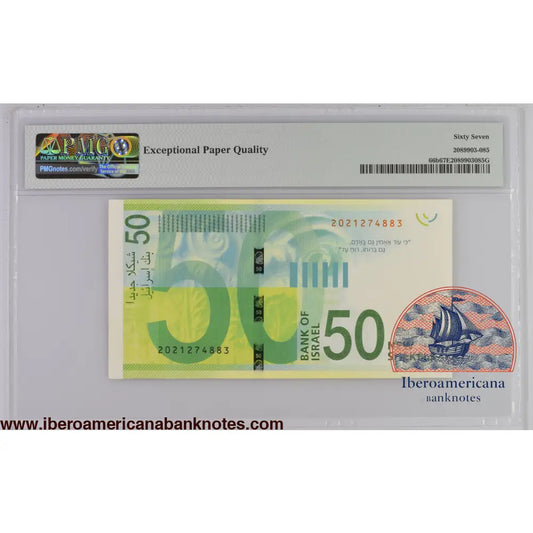
Israel 2014 / 5774 P-66b PMG Superb Gem UNC 67 EPQ 50 New Shekels
Vendor:Iberoamericana BanknotesRegular price €64,95 EURRegular price €64,95 EUR Sale priceUnit price perSold out -
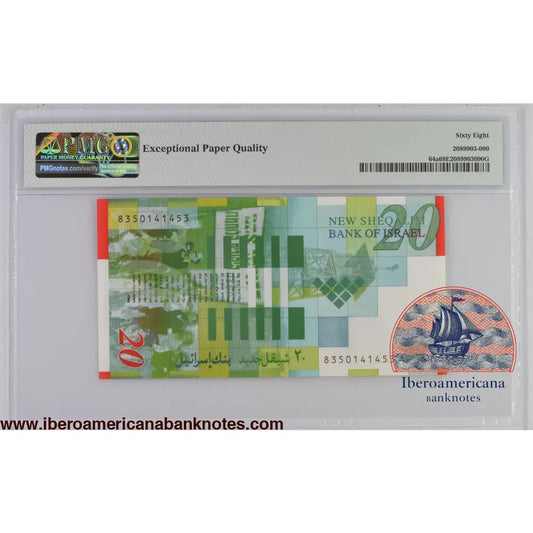
Israel 2008 P-64a PMG Superb Gem UNC 68 EPQ 20 New Sheqalim
Vendor:Iberoamericana BanknotesRegular price €67,95 EURRegular price €67,95 EUR Sale priceUnit price per -
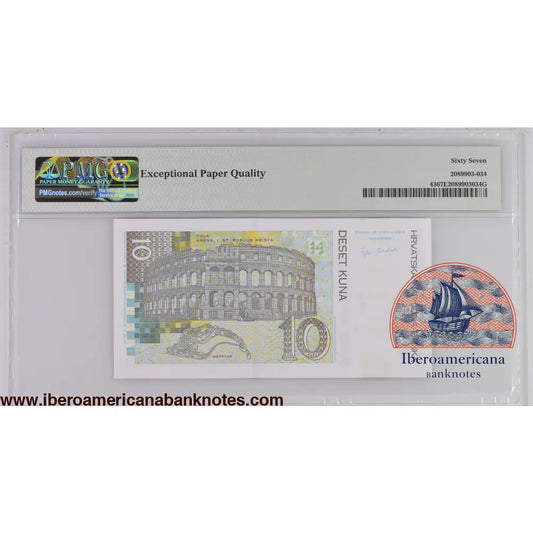
Croatia 30.5.2004 P-43 PMG Superb Gem UNC 67 EPQ 10 Kuna
Vendor:Iberoamericana BanknotesRegular price €42,95 EURRegular price €42,95 EUR Sale priceUnit price perSold out -
Romania 100 Lei P128 2026 Commemorative UNC in folder
Vendor:Iberoamericana BanknotesRegular price €84,95 EURRegular price €84,95 EUR Sale priceUnit price per -
Bulgaria 2 Leva P115a 1999 UNC
Vendor:Iberoamericana BanknotesRegular price €6,95 EURRegular price €6,95 EUR Sale priceUnit price per -
Bulgaria 1 Lev P114a 1999 UNC
Vendor:Iberoamericana BanknotesRegular price €3,95 EURRegular price €3,95 EUR Sale priceUnit price per -
Scotland 10 Pounds P120d 2001 UNC
Vendor:Iberoamericana BanknotesRegular price €39,95 EURRegular price €39,95 EUR Sale priceUnit price per -
Scotland 5 Pounds P370 2016 UNC
Vendor:Iberoamericana BanknotesRegular price €21,95 EURRegular price €21,95 EUR Sale priceUnit price per -
Scotland 1 Pound P211d 1987 UNC
Vendor:Iberoamericana BanknotesRegular price €19,95 EURRegular price €19,95 EUR Sale priceUnit price per -
Scotland 1 Pound P360 1999 UNC
Vendor:Iberoamericana BanknotesRegular price €11,95 EURRegular price €11,95 EUR Sale priceUnit price per -
North Macedonia 100 denari 2020 2022 p29a UNC
Vendor:Iberoamericana BanknotesRegular price €4,95 EURRegular price €4,95 EUR Sale priceUnit price per -
Czech Republic 100 Korun 2018 P18g UNC
Vendor:Iberoamericana BanknotesRegular price €7,95 EURRegular price €7,95 EUR Sale priceUnit price per -
Portugal 1000 escudos 1996 p188a UNC
Vendor:Iberoamericana BanknotesRegular price €19,95 EURRegular price €19,95 EUR Sale priceUnit price per -
Estonia 5 krooni 1994 p76a UNC
Vendor:Iberoamericana BanknotesRegular price €2,95 EURRegular price €2,95 EUR Sale priceUnit price per -
Bosnia Herzegovina 5 convertible maraka 1998 2002 p61a UNC
Vendor:Iberoamericana BanknotesRegular price €29,95 EURRegular price €29,95 EUR Sale priceUnit price per -
Belarus 5000 Rubles 2012 P29b2 UNC
Vendor:Iberoamericana BanknotesRegular price €9,95 EURRegular price €9,95 EUR Sale priceUnit price per -
Belgium 200 francs 1996 P148 UNC
Vendor:Iberoamericana BanknotesRegular price €64,95 EURRegular price €64,95 EUR Sale priceUnit price per -
Albania 2000 leke 2020 p79a UNC
Vendor:Iberoamericana BanknotesRegular price €42,95 EURRegular price €42,95 EUR Sale priceUnit price per






Collection: European Banknotes
Europe has a unique characteristic not found on any other continent: in 2002, more than a dozen countries suddenly stopped issuing their own currency. Pesetas, francs, liras, marks, escudos, guilders, drachmas, and shillings became collector's items that morning, with an exact cutoff date and a circulation that will never grow again.
The pre-euro legacy
This is the most sought-after part of European notaphily, and for a simple reason: these are banknotes that many people once had in their pockets and can no longer possess. The 1000 pesetas with Hernán Cortés, the 50 francs with Saint-Exupéry, the 10 guilders with the Dutch sunflower, or the 1000 German marks represent an entire generation of graphic design that ended abruptly. And it wasn't just in 2002: Slovenia stopped in 2007, Slovakia in 2009, Estonia in 2011, Latvia in 2014, Lithuania in 2015, and Croatia in 2023.
What remains active
Outside the euro zone, the United Kingdom, Switzerland, Norway, Sweden, Denmark, Poland, Czechia, Hungary, Romania, and the Balkan countries continue to issue currency. Romania was the first European country to convert its entire series to polymer, and the regional British pounds—Scotland, Northern Ireland, Jersey, Guernsey, the Isle of Man, and Gibraltar—are short-run issues that many European collectors don't even know exist.
What you'll find here
Banknotes from all over Europe, from the pre-euro legacy to current issues, with their Pick reference and conservation status. If you are specifically interested in the paper currency that is no longer issued, Spain, France, and Greece are the most natural entry points for a collector from this region.
Before buying
All pieces are official issues, never reproductions or facsimiles. The actual conservation status is always indicated, and the shipment is protected and sent with tracking from Spain.
