Discover Honduran Notaphily: A Journey Through Monetary History
Explore the fascinating world of Honduran banknotes , where each bill reflects the rich history of Honduras, from indigenous resistance to 20th-century economic modernization. At Iberoamericana Banknotes , we present our carefully curated collection of Honduran banknotes for both seasoned collectors and new buyers who wish to connect with the cultural and economic heritage of this vibrant Central American nation. These vintage Honduran banknotes are more than just pieces of paper money: they are time capsules that chronicle key moments, such as the adoption of the lempira in 1931, named after Chief Lempira, a symbol of the struggle against Spanish colonization in the 16th century.
The Evolution of Paper Money in Honduras
Before the introduction of the lempira , the Honduran peso was the dominant currency, issued from 1888 by private banks such as the Banco Centro-Americano and, later, by Banco Atlántida in 1913. Peso banknotes circulated primarily in the northern region. The transition to the lempira, formalized by Legislative Decree No. 102 of April 6, 1926, and published in La Gaceta on April 22, marked a milestone in monetary history, aligning the currency with the value of half a US dollar. The first 1-lempira banknote, issued in 1932 by the American Bank Note Company of New York, featured the portrait of Chief Lempira on the obverse and the national coat of arms on the reverse. The designs, which won an art competition led by Arturo López Rodezno, incorporated Mayan and agricultural motifs highlighting Honduran identity.
Rare Banknotes and Their Historical Significance
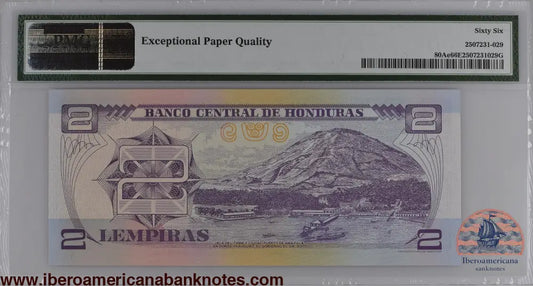
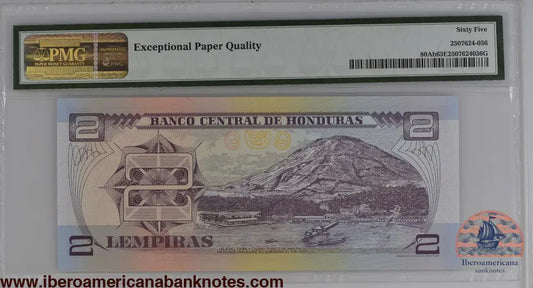
Our collection includes rare Honduran banknotes , such as the initial 1932 issues in denominations of 1, 2, 5, and 10 lempiras, produced before the Central Bank of Honduras (BCH) assumed sole control in 1950. That year, the BCH launched the first official 5-lempira banknote, featuring the face of Francisco Morazán, a hero of Central American independence, whose image had already appeared on 1915 peso banknotes issued by the Banco de Comercio. Other national heroes featured in banknotes include José Trinidad Cabañas (10 lempiras, 1951, with agricultural motifs), Dionisio de Herrera (20 lempiras, 1951, with the former presidential residence), José Cecilio del Valle (100 lempiras), and Marco Aurelio Soto (2 lempiras, 1978, with views of Isla del Tigre).
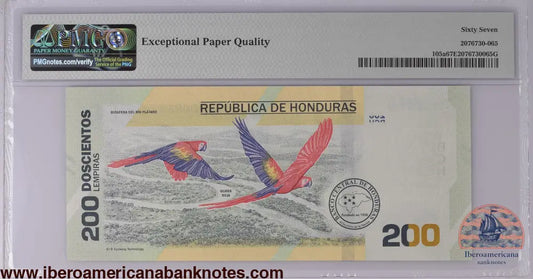
For lovers of Central American banknotes , we highlight unique pieces such as the 2019 commemorative 200-lempira note, issued for the bicentennial of independence (1821-2021), featuring the 1821 Government House on the obverse and symbols of national unity on the reverse. These banknotes incorporate modern security features, such as metallic threads, optically variable inks, and inclusive Braille systems (introduced in 2013) designed for people with visual impairments. The rarity of issues like the 1917 peso banknotes or the 1950 series, with their limited initial print runs, makes them coveted pieces at international auctions, valued for their connection to the banana economy and post-independence monetary reforms.
Conservation and Authenticity: Pillars of Our Collection
Conservation is essential in collecting Honduran banknotes . Each piece is graded on standard scales such as VF (Very Fine) or UNC (Uncirculated), guaranteeing crisp details in watermarks, fluorescent fibers, and signatures of Central Bank of Honduras (BCH) presidents. We recommend that collectors of rare banknotes verify authenticity under UV light, where elements such as serial numbers and central designs glow in orange or yellow tones, according to BCH standards. At Iberoamericana Banknotes , each banknote undergoes a rigorous verification process to detect counterfeits, avoiding common errors such as defective printing or missing security threads, which are frequent in replicas of colonial banknotes.
Why Collect Honduran Banknotes
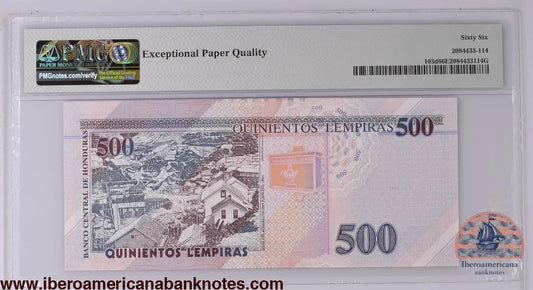
From the 2006 20-lempira note, featuring the bust of Dionisio de Herrera and the presidential mansion in shades of green, to the 500-lempira note with Ramón Rosa, a champion of the abolition of slavery, this collection offers a window into Honduran history. Each piece reflects key moments, from pre-Hispanic bartering to the establishment of the Mint in Tegucigalpa in 1879. For new buyers , it's an opportunity to invest in cultural heritage; for experienced collectors , it's a chance to complete series with rare or commemorative denominations.
Ibero-American Banknotes Commitment
At Iberoamericana Banknotes , we guarantee the authenticity of every banknote with detailed certificates and expertise in Ibero-American numismatics. We offer pieces in optimal condition to enrich your collection and provide secure and discreet international shipping to any destination. Trust our authority to take your passion for Honduran banknote collecting to the next level.