-
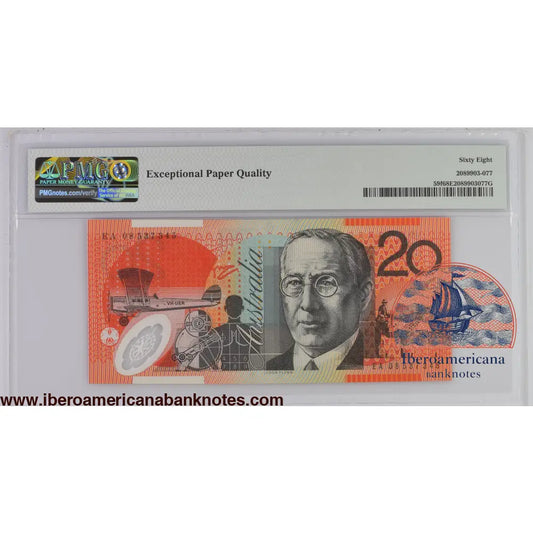
Australia 2008 P-59f PMG Superb Gem UNC 68 EPQ 20 Dollars
Vendor:Iberoamericana BanknotesRegular price €89,95 EURRegular price €89,95 EUR Sale priceUnit price / per€99,95 EURSale -
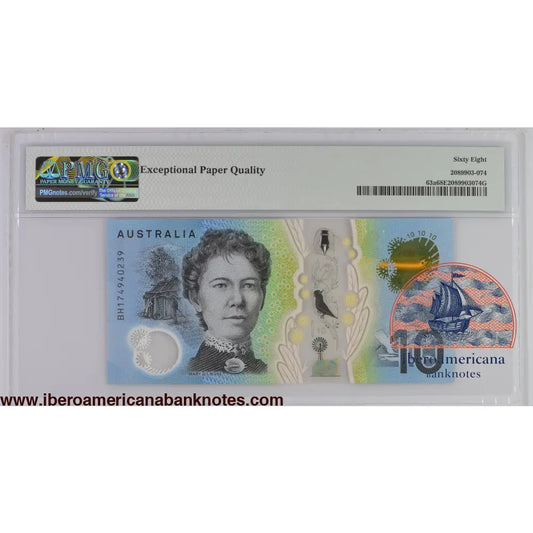
Australia 2017 P-63a PMG Superb Gem UNC 68 EPQ 10 Dollars
Vendor:Iberoamericana BanknotesRegular price €59,95 EURRegular price €59,95 EUR Sale priceUnit price / per -
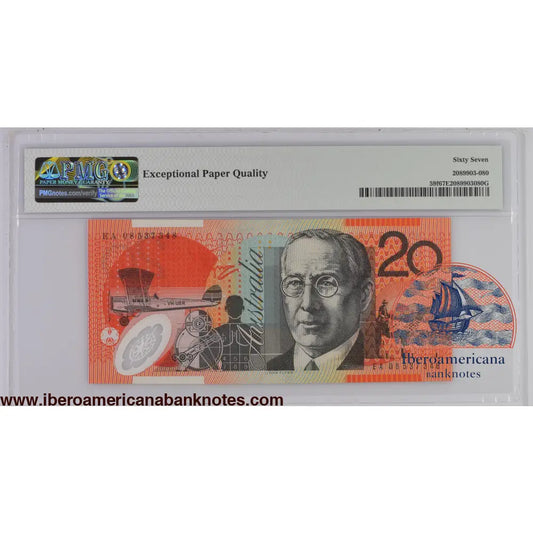
Australia 2008 P-59f PMG Superb Gem UNC 67 EPQ 20 Dollars
Vendor:Iberoamericana BanknotesRegular price €69,95 EURRegular price €69,95 EUR Sale priceUnit price / per -
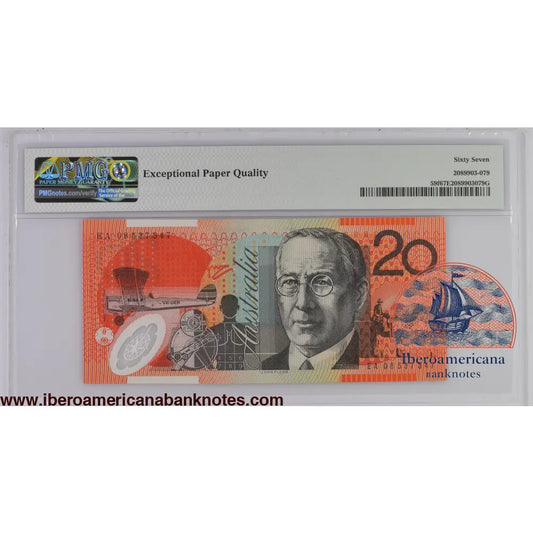
Australia 2008 P-59f PMG Superb Gem UNC 67 EPQ 20 Dollars
Vendor:Iberoamericana BanknotesRegular price €69,95 EURRegular price €69,95 EUR Sale priceUnit price / per
Collection: Australian banknotes. Polymer pioneers
Explore Australian Notaphily: A Tribute to Innovation and Culture
Delve into the fascinating world of Australian banknotes , where each one reflects Australia's vibrant history, unique biodiversity, and innovative spirit. At Iberoamericana Banknotes , we present our carefully curated collection of Australian banknotes , perfect for both seasoned collectors and new buyers passionate about the monetary heritage of this iconic island nation. Vintage Australian banknotes are more than just paper money: they are relics that chronicle the introduction of the Australian dollar in 1966, a milestone that marked economic modernization and national identity, replacing the pound and pioneering the use of polymer banknotes since 1988.
Australia's Monetary Evolution: From the Pound to the Dollar
Before 1966, Australia used the Australian pound , issued by the Reserve Bank of Australia (RBA) , founded in 1960, and private banks such as the Commonwealth Bank. The transition to the Australian dollar , officially adopted on February 14, 1966, marked a shift to a decimal currency. The first $1 notes, issued in 1966, featured designs with Queen Elizabeth II and Indigenous motifs, such as Aboriginal art and local wildlife. In 1988, Australia revolutionized banknote collecting by introducing polymer banknotes with the bicentennial commemorative $10 note , offering greater durability and security.
Rare Banknotes: Jewels of Australian Notaphily
Our collection includes rare Australian banknotes , such as the 1913–1965 pound issues in denominations of 10 shillings, 1 pound, and 5 pounds, featuring engravings of Queen Elizabeth II and agricultural scenes. The 1966–1985 dollar series are notable for their designs, with Sir Henry Parkes, the Father of Federation, on the 5 dollar note and the explorer Matthew Flinders on the 10 dollar note . Commemorative issues, such as the 1988 10 dollar note, feature Aboriginal art and the HMS Supply, celebrating the bicentenary of European arrival.
For enthusiasts of Australian banknotes , we offer unique pieces such as the 1996 $100 note featuring soprano Nellie Melba and the Sydney Theatre, and the modern 2018 $50 note highlighting Aboriginal writer David Unaipon and Edith Cowan, the first female member of Parliament. These polymer banknotes incorporate advanced security features, including transparent windows, optically variable inks, microtext, and tactile elements for the visually impaired, pioneered since 1988. The rarity of issues such as the 1913 £1 note or the 1966 dollar series, with limited print runs during the transition period, makes them coveted pieces at international auctions, valued for their connection to the Australian federation and Aboriginal culture.
Preservation and Authenticity: Our Promise
Conservation is a key pillar in our selection of Australian banknotes . Each piece is assessed according to international standards such as VF (Very Fine) or UNC (Uncirculated), guaranteeing the clarity of details like watermarks with the Australian coat of arms, fluorescent fibers, and RBA governors' signatures. We recommend that collectors of rare banknotes verify authenticity under UV light, where elements such as serial numbers and cultural motifs glow in shades of green or blue, in accordance with RBA standards. At Iberoamericana Banknotes , each banknote undergoes a rigorous verification process to guarantee its authenticity , preventing common counterfeits such as defective printing or missing transparent windows, which are frequent in replicas of paper banknotes or those from the early polymer series.
Why Collect Australian Banknotes
From the 1966 $1 note featuring Queen Elizabeth II and Aboriginal art to the 2019 $20 note with Mary Reibey and the Mercury, this collection celebrates Australian identity: its biodiversity, Indigenous heritage, and monetary innovation. Each note reflects milestones such as the decimalization of 1966 or the introduction of polymer in 1988. For new buyers , it's an opportunity to invest in pieces with historical value; for experienced collectors , it's a chance to complete series with rare or commemorative denominations that enrich any collection.
Trust Iberoamericana Banknotes
At Iberoamericana Banknotes , we guarantee the authenticity of every banknote with detailed certificates and expertise in Ibero-American and global numismatics. We offer pieces in optimal condition to enhance your collecting legacy and provide secure and discreet international shipping to any destination. Embark on a journey through Australian banknotes and own a piece of history with Iberoamericana Banknotes .