
-
Guatemala 1 Quetzal 2006 P109 B593a UNC
Vendor:Iberoamericana BanknotesRegular price €1,95 EURRegular price €1,95 EUR Sale priceUnit price per -
Romania 1 Leu 2018/2024 P117p Polymer UNC
Vendor:Iberoamericana BanknotesRegular price €0,95 EURRegular price €0,95 EUR Sale priceUnit price per -
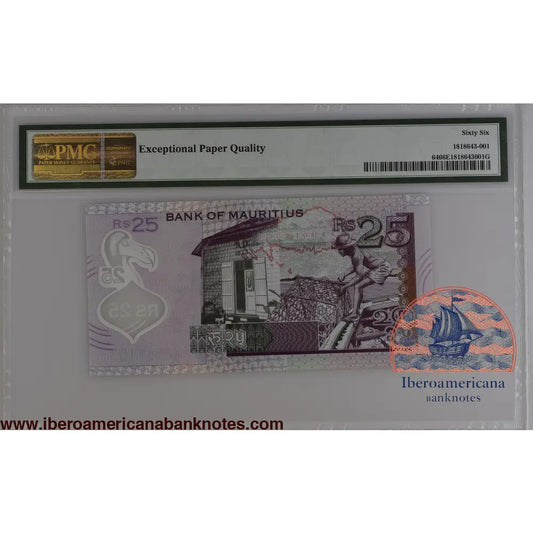
Mauritius 2013 P-64 PMG Gem UNC 66 EPQ 25 Rupees
Vendor:Iberoamericana BanknotesRegular price €24,95 EURRegular price €24,95 EUR Sale priceUnit price per -
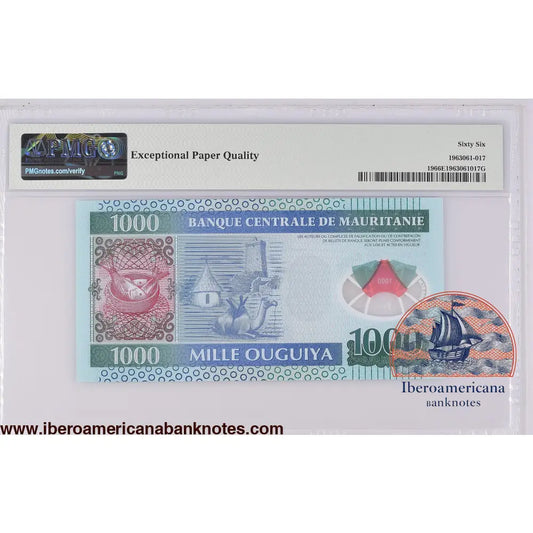
Mauritania 28.11.2014 P-19 PMG Gem UNC 66 EPQ 1000 Ouguiya
Vendor:Iberoamericana BanknotesRegular price €24,95 EURRegular price €24,95 EUR Sale priceUnit price per -
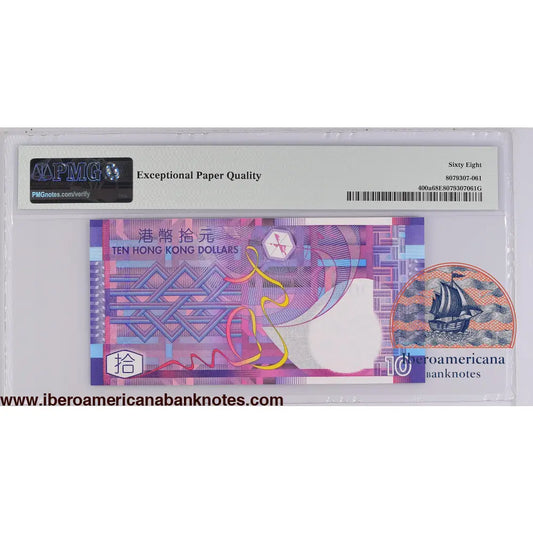
Hong Kong 1.7.2002 P-400a PMG Superb Gem UNC 68 EPQ 10 Dollars
Vendor:Iberoamericana BanknotesRegular price €34,95 EURRegular price €34,95 EUR Sale priceUnit price per -
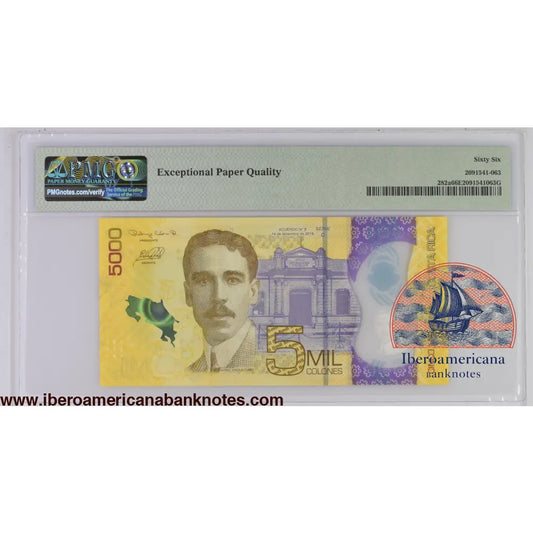
Costa Rica 2018 (ND 2020) P-282a PMG Gem UNC 66 EPQ 5000 Colones
Vendor:Iberoamericana BanknotesRegular price €59,95 EURRegular price €59,95 EUR Sale priceUnit price per -
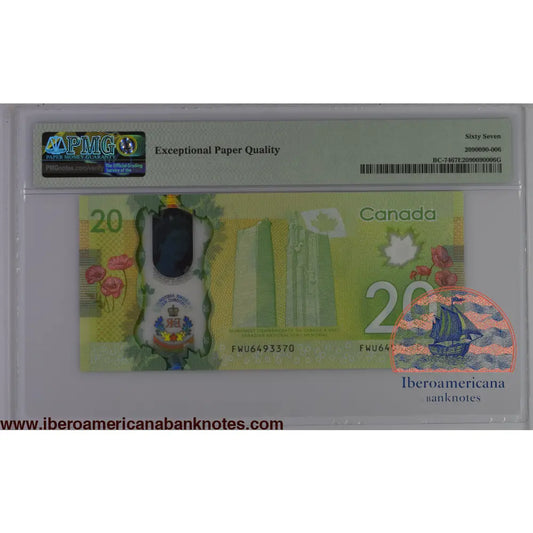
Canada 2015 BC-74 PMG Superb Gem UNC 67 EPQ 20 Dollars Commemorative
Vendor:Iberoamericana BanknotesRegular price €139,95 EURRegular price €139,95 EUR Sale priceUnit price per€149,95 EURSale -
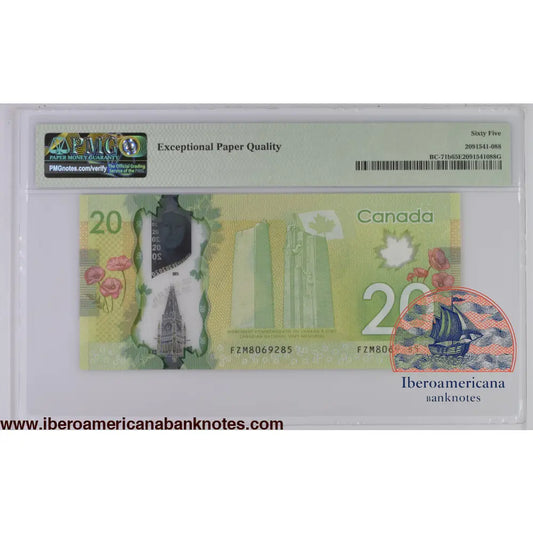
Canada 2012 BC-71b PMG Gem UNC 65 EPQ 20 Dollars
Vendor:Iberoamericana BanknotesRegular price €61,95 EURRegular price €61,95 EUR Sale priceUnit price per -
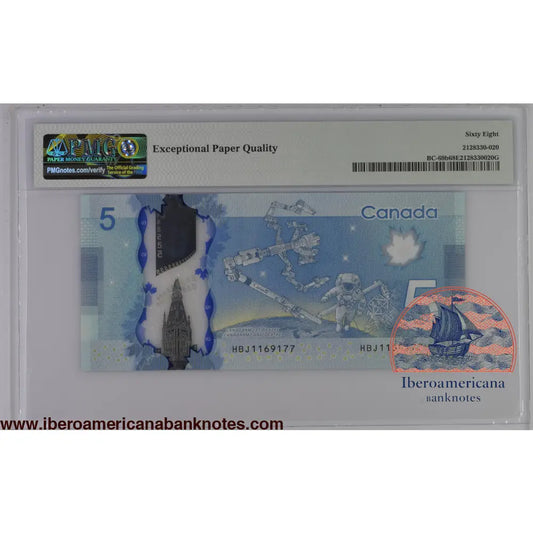
Canada 2013 BC-69b PMG Superb Gem UNC 68 EPQ 5 Dollars
Vendor:Iberoamericana BanknotesRegular price €67,95 EURRegular price €67,95 EUR Sale priceUnit price per -
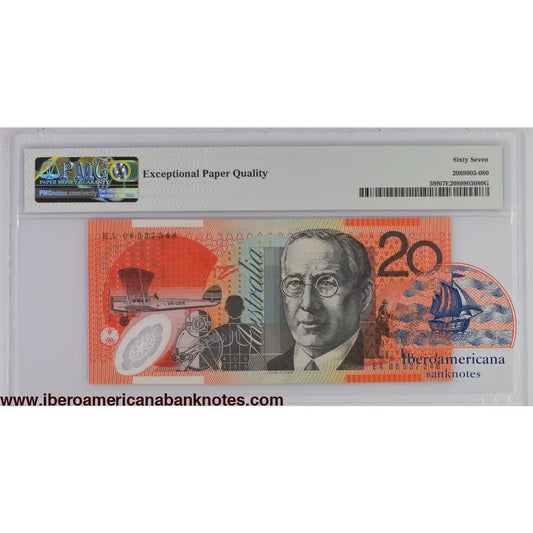
Australia 2008 P-59f PMG Superb Gem UNC 67 EPQ 20 Dollars
Vendor:Iberoamericana BanknotesRegular price €69,95 EURRegular price €69,95 EUR Sale priceUnit price per -
São Tomé and Príncipe 50 dobras 2026 commemorative polymer UNC
Vendor:Iberoamericana BanknotesRegular price €11,95 EURRegular price €11,95 EUR Sale priceUnit price per€13,95 EURSale -
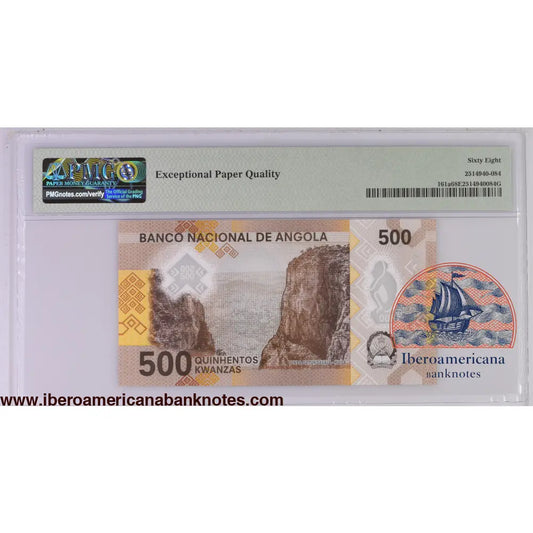
Angola 2020 P-161a PMG Superb Gem UNC 68 EPQ 500 Kwanzas
Vendor:Iberoamericana BanknotesRegular price €39,95 EURRegular price €39,95 EUR Sale priceUnit price per -
Solomon Islands 10 Dollars P39 2023 UNC
Vendor:Iberoamericana BanknotesRegular price €4,95 EURRegular price €4,95 EUR Sale priceUnit price per -
Scotland 5 Pounds P370 2016 UNC
Vendor:Iberoamericana BanknotesRegular price €21,95 EURRegular price €21,95 EUR Sale priceUnit price per -
Bhutan 100 Ngultrum P43 2025 UNC
Vendor:Iberoamericana BanknotesRegular price €6,95 EURRegular price €6,95 EUR Sale priceUnit price per













Collection: Polymer banknotes
In 1988, Australia issued the world's first general circulation polymer banknote, a $10 bicentennial commemorative. Almost forty years later, over fifty countries are issuing currency in plastic, and for collectors, it has become a category in itself with its own rules.
What makes them special to collect
Polymer allows for things that paper doesn't: transparent windows, holograms integrated into the substrate, tactile reliefs, and inks that change color when the banknote is tilted. It also lasts much longer: an uncirculated polymer banknote is less likely to deteriorate in an album than a cotton one, and it doesn't ripple with humidity.
Where the interesting part is
Romania was the first European country to switch its entire series to polymer, which is why its lei are the cheapest entry point into this category. Vietnam did the same in Asia. Nigeria, Zambia, and Mozambique use it in their low denominations, which is precisely where banknotes suffer the most. And Nicaragua, Fiji, or Papua New Guinea have short-run plastic commemoratives that are not reissued.
What you will find here
Uncirculated polymer banknotes from all five continents, with their catalog reference. Many are commemorative issues, as plastic is often used for special editions.
A note on their preservation
Polymer doesn't tear, but it does crease: a fold in plastic leaves a white line that won't go away. That's why truly uncirculated specimens are worth more than paper ones, and why they are always shipped flat and protected.
